Executive Summary
Investors rarely commit capital because of opportunity alone.
Opportunity attracts attention. Confidence justifies commitment.
From an investor's perspective, the critical question is not whether something is possible. The critical question is whether the conditions exist to support confidence over time.
This distinction becomes increasingly important within complex environments where success depends upon workforce capability, infrastructure readiness, governance stability, regulatory certainty, operational discipline and long-term adaptability. Individual opportunities may appear compelling in isolation. Investors must determine whether the broader system surrounding those opportunities can support sustainable outcomes.
Confidence is rarely created by ambition alone.
Confidence emerges when evidence, capability and operating conditions become sufficiently aligned to support informed judgement.
Capital Follows Confidence
Investment decisions are often described as capital allocation decisions.
In practice, they are confidence allocation decisions.
Capital does not move simply because an opportunity exists. Capital moves when investors believe that the conditions supporting the opportunity are credible, resilient and capable of enduring long enough to justify commitment.
This requires more than a compelling proposition. Investors evaluate the systems surrounding the proposition. They seek evidence that governance functions effectively, that operational capability can be sustained, that workforce requirements can be met, and that dependencies are sufficiently understood.
The question is not:
Can this succeed?
The more useful question is:
What evidence supports confidence that success remains achievable under real-world conditions?
Confidence Emerges From Evidence
Confidence is often discussed as though it were an intangible feeling.
For serious investors, confidence emerges from evidence.
Governance arrangements, workforce capability, infrastructure availability, regulatory conditions and operational performance collectively contribute to an informed assessment of future potential.
Where evidence is weak, confidence becomes fragile.
Where evidence is strong, confidence becomes more durable.
This does not remove risk. Investment always involves uncertainty. What changes is the investor's ability to understand which risks are understood, which risks remain unresolved, and which assumptions require further validation.
Confidence therefore becomes a consequence of understanding rather than optimism.
Risk Is Often Hidden Within Relationships
Many risks are not visible when organisations or projects are viewed in isolation.
They emerge through interactions between dependencies.
Supplier capability affects operational continuity. Workforce constraints affect execution capacity. Regulatory change affects investment horizons. Infrastructure limitations affect scalability. Governance quality influences all of the above.
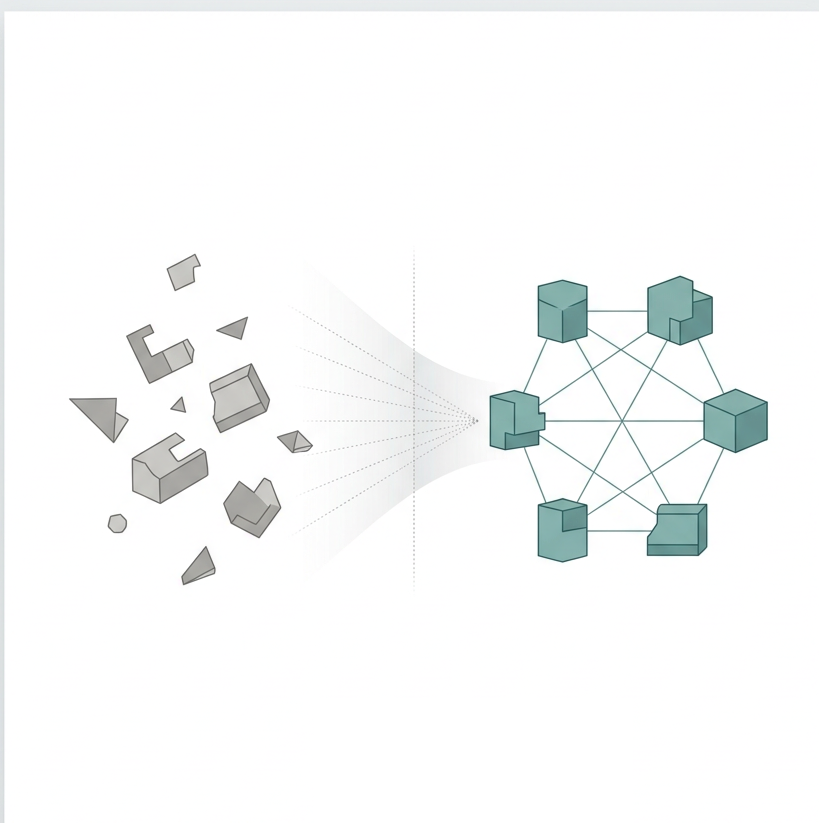
Investors therefore spend significant effort examining relationships rather than individual assets.
The most significant risks are often found at the points where systems connect.
This is particularly important within complex environments where small changes in one area can create disproportionate effects elsewhere.
The objective is not to eliminate risk.
The objective is to understand how risk behaves within the broader system.
Time Matters
Operators focus on execution.
Investors focus on time.
A capability that appears attractive today may not remain attractive if it cannot be sustained. Short-term success does not necessarily translate into long-term resilience.
Investors therefore examine whether capability can adapt as conditions change.
Workforce expectations evolve. Technologies mature. Regulations shift. Market conditions fluctuate. New dependencies emerge.
Confidence increases when systems demonstrate the capacity to absorb these changes without losing coherence.
Long-term value is often created by adaptability rather than by optimisation alone.
Advanced Medical Device Manufacturing As An Example
Highly regulated environments make these dynamics visible.
Advanced Medical Device Manufacturing provides a useful example because confidence depends upon more than production capability. Investors must evaluate workforce readiness, validation obligations, quality systems, supply chain resilience, governance discipline and long-term operational sustainability.
The value of the example is not the sector itself.
The value is the way it reveals the conditions investors use to assess confidence.
Similar patterns can be found across many complex environments where reliability, evidence and long-term capability matter.
The principles are broader than the industry.
Confidence And Participation
Investment is often viewed as a transaction.
In complex systems, investment is more accurately understood as participation.
Capital becomes one method through which participants contribute to capability formation. Confidence, alignment and shared understanding become increasingly important because capability develops over time rather than appearing immediately.
Investors therefore evaluate not only what exists today, but the conditions that support future participation, adaptation and growth.
This requires visibility into the environment as a whole rather than visibility into isolated opportunities.
Executive Reflection
From the investor's perspective, capability alone is insufficient.
Capability may demonstrate potential.
Confidence determines commitment.
The critical question is not:
What opportunity exists?
The more useful question is:
What conditions justify confidence that the opportunity can sustain value over time?
Investors who understand these conditions are often better positioned to engage uncertainty with greater discipline, resilience and long-term perspective.
Continue Reading
Operators view capability through execution.
Investors view capability through confidence.
Governments view capability through resilience, participation and long-term public outcomes.
The next briefing examines capability through the Government Lens, where the focus shifts from organisational success to system-wide capability and national resilience.
Access
Selected material is available where alignment exists.