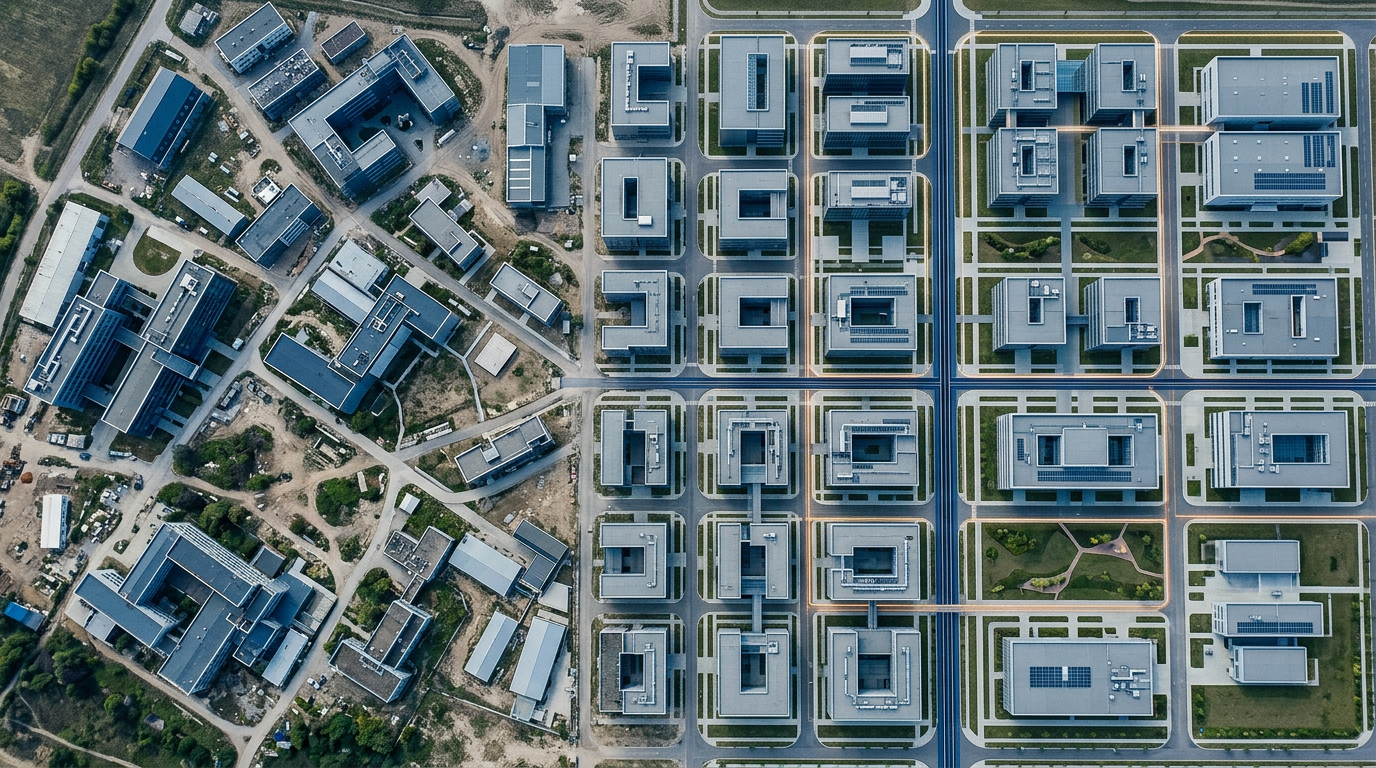
Interpreting capability within constrained systems
Markets often observe:
demand
growth
supply gaps
investment activity
These are visible signals.
They reveal conditions.
They do not fully explain the systems that produce them.
The Structural Condition
In many strategic industries, demand may be local while production capability remains distributed, external, or difficult to access directly.
Capability and demand do not always reside within the same system.
This creates a persistent condition:
dependency on external systems
exposure to global supply dynamics
limited direct control over production capability
What is Often Assumed
This condition is frequently interpreted as:
A requirement to increase capacity.
This interpretation is incomplete.
The Underlying Constraint
Highly regulated environments do not behave like general production environments.
It operates within:
regulatory frameworks
quality management systems
validated processes
lifecycle traceability
These define what can be produced, how it can be produced, and what can scale.
Capital Interaction
Within this environment, capital does not act freely.
It interacts with:
system constraints
compliance conditions
process requirements
This means:
Investment in capacity does not automatically produce capability.
Capability emerges when investment, trust, structure and execution conditions align.
Where Structural Friction Emerges
Misalignment between:
- capital deployment
and
- system requirements
can result in:
delayed execution
constrained scaling
underperforming assets
Structural Tension
The system contains several persistent tensions:
demand vs production control
capacity vs capability
expansion vs compliance
efficiency vs resilience
These are not temporary.
They are structural.
Reframing the System
The central question is not:
How do we increase output?
The central question is:
How do we recognise, structure and mobilise capability within constrained systems?
Where this Becomes Visible
Structure alone is not sufficient.
The next challenge is understanding how capability, capital and participation interact within real operating environments.
The following reports explore these relationships through specific industrial contexts and emerging system dynamics.
Capability as Structure
When correctly aligned, capability becomes:
repeatable
system-integrated
defensible
trusted
This is different from:
isolated facilities
incremental expansion
uncoordinated production
The Deeper Layer
What is visible:
market demand
production outputs
supply constraints
What ultimately shapes outcomes:
system structure
capability organisation
trust relationships
regulatory alignment
The relationship between these layers defines both:
the risk profile
and the opportunity set
Access
Additional reports, perspectives and research materials are available for those exploring capability, trust and adaptation within complex systems.