Operator Briefing
Operational capability is rarely constrained by intent.
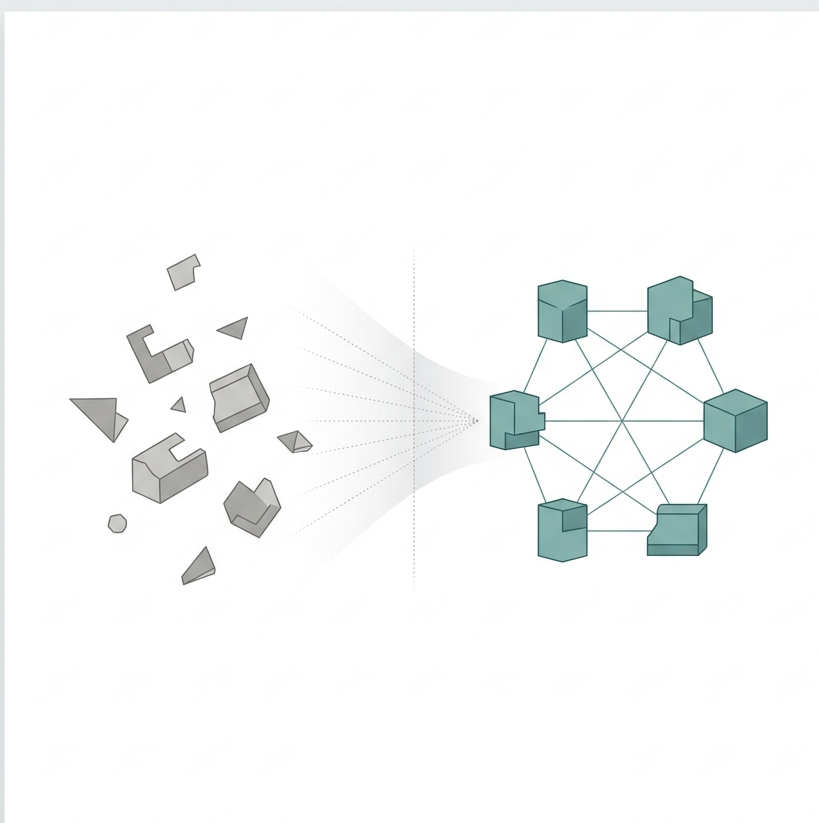
Organisations rarely struggle because they lack ambition. More often, they struggle because capability, resources and execution conditions are not aligned.
From an operator's perspective, capability is not measured by what an organisation hopes to achieve. It is measured by what can be executed reliably, repeatedly and under the conditions imposed by the environment itself.
This distinction becomes increasingly important as systems grow more complex. Workforce requirements evolve, supply chains shift, regulatory expectations increase, and operational environments must adapt without compromising quality, compliance or continuity.
The challenge is rarely the absence of ideas, investment or opportunity. The challenge is understanding whether the structures needed to support execution actually exist and whether capability can be mobilised when conditions become difficult, uncertain or constrained.
Operators encounter this reality every day. Apparent capability and operational capability are not always the same thing. Capacity may exist on paper while execution remains dependent on workforce readiness, process maturity, infrastructure alignment and system resilience.
Understanding those relationships provides a clearer view of what is truly operational, what remains constrained, and where capability can be strengthened over time.
This briefing examines capability through the lens of execution, resilience and system readiness, with a particular focus on how complex environments influence what can be reliably delivered.
Why This Matters
Operational environments are often evaluated through visible measures such as output, capacity, volume or growth. While important, these indicators can create a misleading impression of capability if the underlying execution conditions are not understood.
From an operator's perspective, capability is not demonstrated when conditions are favourable. Capability is demonstrated when systems continue to perform under constraint. Regulatory requirements, workforce dependencies, supply chain disruptions, equipment availability and process controls all influence what can actually be delivered and sustained over time.
This becomes particularly important in regulated environments where reliability cannot be separated from compliance. Production cannot simply be increased through intent or investment alone. Processes must remain controlled, outcomes must remain traceable and execution must remain consistent even as circumstances change.
The distinction is often invisible until pressure is applied. Under stable conditions, many organisations can appear capable. Under disruption, the difference between apparent capability and operational capability becomes easier to observe. Some systems continue to perform reliably while others expose structural weaknesses that were previously hidden.
For operators, understanding these conditions is essential. Reliable execution depends less on individual activities and more on whether the wider system is capable of sustaining performance over time.
If operational capability depends on more than resources and intent, the next question becomes:
What conditions determine whether capability can actually be executed?
What Defines Execution Capability
Execution capability is often discussed as though it were a single attribute. In practice, it is the result of multiple conditions operating together within a wider system.
From an operator's perspective, capability is not determined by facilities alone, workforce numbers alone or investment alone. It emerges when people, processes, infrastructure and governance are sufficiently aligned to support reliable execution over time.
This distinction matters because many environments can demonstrate activity without demonstrating operational capability. Products can be designed, opportunities identified and prototypes developed while the conditions required for consistent execution remain incomplete. True capability only becomes visible when outcomes can be reproduced under real-world conditions and sustained as circumstances evolve.
Execution capability therefore depends on more than technical expertise. It depends on validated processes, capable people, suitable environments, clear responsibilities and the ability to maintain performance as pressure increases. Each element contributes to the reliability of the system as a whole.
When one element falls out of alignment, capability may still appear to exist, yet execution becomes increasingly fragile. Delays emerge. Dependencies become visible. Confidence declines. Organisations often discover that what appeared operational under ideal conditions struggles when exposed to complexity, growth or disruption.
For operators, understanding these dependencies is essential. Capability should not be assessed only by what the organisation can do today, but by its ability to continue performing tomorrow, under changing conditions and increasing demands.
Execution capability is ultimately a system condition. It reflects the degree to which people, processes, infrastructure and governance can work together to consistently produce reliable outcomes.
The challenge is not simply building capability.
The challenge is creating the conditions in which capability can be executed, sustained and trusted.
↓
Understanding execution capability naturally leads to a second question:
What determines the boundaries within which capability can operate?
Those boundaries are often less visible than capability itself, yet they frequently determine what can actually be achieved in practice.
The Constraint Reality
Operators are often tasked with delivering outcomes while working within conditions they do not fully control.
Capability does not operate in isolation. Every operational environment contains constraints that influence what can be executed, how quickly it can adapt and how reliably it can perform over time. Some constraints are visible, while others only emerge when systems are placed under pressure.
In regulated environments, these constraints commonly include governance requirements, validation pathways, workforce readiness, supply chain dependencies, facility limitations and quality management obligations. While they are often perceived as restrictions, they are better understood as the conditions within which capability must function.
This distinction matters because organisations frequently evaluate capability based on what appears possible under ideal circumstances. Operators learn quickly that real capability is revealed at the point where ambition encounters constraint. The ability to execute successfully depends not only on resources and intent, but on whether the wider operating environment can support reliable action.
Constraints also shape the speed of adaptation. New opportunities, changing market conditions, emerging technologies and evolving customer requirements may create valid reasons for change, yet every change must pass through the realities of the system itself. Processes require adjustment, people require alignment, approvals require progression and operational continuity must be maintained while adaptation occurs.
For this reason, capability should not be viewed as a fixed asset. It should be understood as a dynamic relationship between opportunity and constraint. Organisations that understand their constraint landscape gain a clearer view of what can be achieved, what requires development and where hidden dependencies may exist.
The strongest operational environments do not eliminate constraints. They understand them. They build structures that allow capability to perform reliably within them and adapt effectively as those constraints evolve.
The question is not whether constraints exist.
The question is whether capability has been structured to operate successfully within them.
↓
If capability depends on execution, and execution operates within constraints, then the next question is straightforward:
What conditions must remain aligned before capability can become operational?
Workforce and Facility Dependency
Capability does not emerge from processes alone. It depends on the continued alignment of people, facilities, infrastructure and operating environments.
From an operator's perspective, workforce readiness is often one of the least visible yet most important determinants of execution capability. Procedures may be documented, systems may be validated and facilities may be available, but reliable execution still depends on the people responsible for applying judgement, maintaining standards and responding when conditions change.
Facilities create a similar dependency. Capability is influenced not only by what a facility was designed to do, but also by whether it can sustain production, maintain compliance and adapt without introducing unacceptable levels of risk. Infrastructure, utilities, equipment readiness, maintenance regimes and quality systems all contribute to the operational condition of the environment itself.
These dependencies are rarely obvious when systems are stable. During growth, disruption or periods of increased demand, however, they become highly visible. Staffing shortages, capability gaps, facility constraints and infrastructure limitations can quickly expose the difference between theoretical capacity and operational capability.
This is why capability should not be viewed as a standalone asset. It is a relationship between workforce readiness, facility suitability, operational discipline and organisational alignment. When these conditions reinforce one another, capability becomes more reliable, repeatable and resilient. When they drift apart, execution becomes increasingly fragile.
Operators often focus on equipment, resources and output because those factors are visible. Yet sustained performance is often determined by less visible dependencies such as experience, training, workforce continuity, facility maturity and the ability of the organisation to maintain alignment over time.
The strongest operational environments are not those with the fewest dependencies. They are those that understand their dependencies, manage them deliberately and build capability around them.
Capability is rarely constrained by a single point of failure.
More often, it is constrained by the accumulation of dependencies that must remain aligned for execution to occur reliably.
↓
A common mistake is to assume that visible activity and operational capability are the same thing.
In practice, they are often very different.
Structured Capability Versus Activity
Activity is often mistaken for capability.
Projects start. Meetings occur. Plans are developed. Investments are announced. New initiatives gain momentum. From a distance, these activities can create the impression that capability is expanding and that progress is being made.
Operators learn that activity and capability are not the same thing.
Activity represents effort. Capability represents the ability to produce reliable outcomes repeatedly, under real-world conditions and over sustained periods of time. One is visible almost immediately. The other is typically revealed only through execution.
This distinction becomes particularly important in environments experiencing growth, disruption or change. Organisations can appear highly active while still lacking the structures required to execute consistently. New facilities may be commissioned, additional personnel recruited and investment deployed without necessarily improving operational capability. Without alignment across systems, processes, workforce readiness and governance, activity can increase while operational performance remains largely unchanged.
Structured capability is different. Structured capability is observable through repeatability, reliability and resilience. It allows organisations to sustain performance beyond individual projects, individual teams or individual periods of favourable conditions. When capability is structured correctly, execution becomes progressively less dependent on circumstance and increasingly dependent on the strength of the system itself.
This is why operators often focus on conditions rather than intentions. They seek to understand whether capability can survive pressure, absorb disruption and maintain performance when normal operating assumptions no longer apply. These questions reveal far more about organisational capability than activity alone.
The challenge is that activity often receives the attention while capability remains largely hidden. Capability exists in workforce maturity, operating discipline, process integrity, infrastructure readiness and the relationships between them. These are not always visible from external performance indicators, yet they frequently determine whether execution succeeds or fails.
From an operational perspective, capability should therefore be assessed by examining what an organisation can reliably sustain, not simply what it can initiate.
Activity demonstrates intent.
Structured capability determines whether intent can become reliable execution.
↓
The true test of capability rarely occurs under ideal conditions.
It emerges when systems encounter disruption, uncertainty and competing demands.
Closing Perspective
From an operator's perspective, capability is not determined by intention, investment or activity alone.
It is determined by whether people, processes, facilities, infrastructure and governance remain aligned when execution is required. The most significant challenges are rarely visible in periods of stability. They emerge when organisations encounter disruption, growth, changing conditions or increasing complexity.
This is why operators often focus on structure rather than activity, resilience rather than optimism, and execution rather than aspiration. Reliable outcomes rarely emerge from isolated actions. They emerge from systems that have been designed, tested and refined to perform under real-world conditions.
The broader challenge extends beyond operational environments alone. Questions about capability, participation, resilience, adaptation and trust increasingly affect institutions, industries, communities and economies alike. Understanding these relationships is becoming more important as organisations navigate changing workforce dynamics, evolving expectations and increasingly interconnected systems.
Operational capability is therefore not simply a question of what an organisation can do today. It is a question of what it can continue to do tomorrow, when conditions become less predictable and execution matters most.
This briefing has explored one operational perspective on those challenges.
The wider discussion continues.
Continue Exploring
The themes explored in this briefing form part of a broader conversation about trust, capability, participation, complexity and adaptation.
These topics are explored in greater depth through Perspectives, where observations, reports and essays examine the forces shaping organisations, institutions and communities during a period of significant change.
Perspectives explores questions such as:
What enables capability to become action?
How does trust influence participation and coordination?
Why do some systems adapt while others struggle?
What role does resilience play in periods of uncertainty?
How should leaders interpret complexity in a changing environment?
Continue to Perspectives →
Different perspectives. Shared realities. Better understanding.
Access
Selected material is available where alignment exists.